

I’ve written in this short series about how we can understand the economy by analogy with a card game involving a group of players using 3 decks of cards — purple, green and pink. The cards represent what each person owns, is owed and owes.
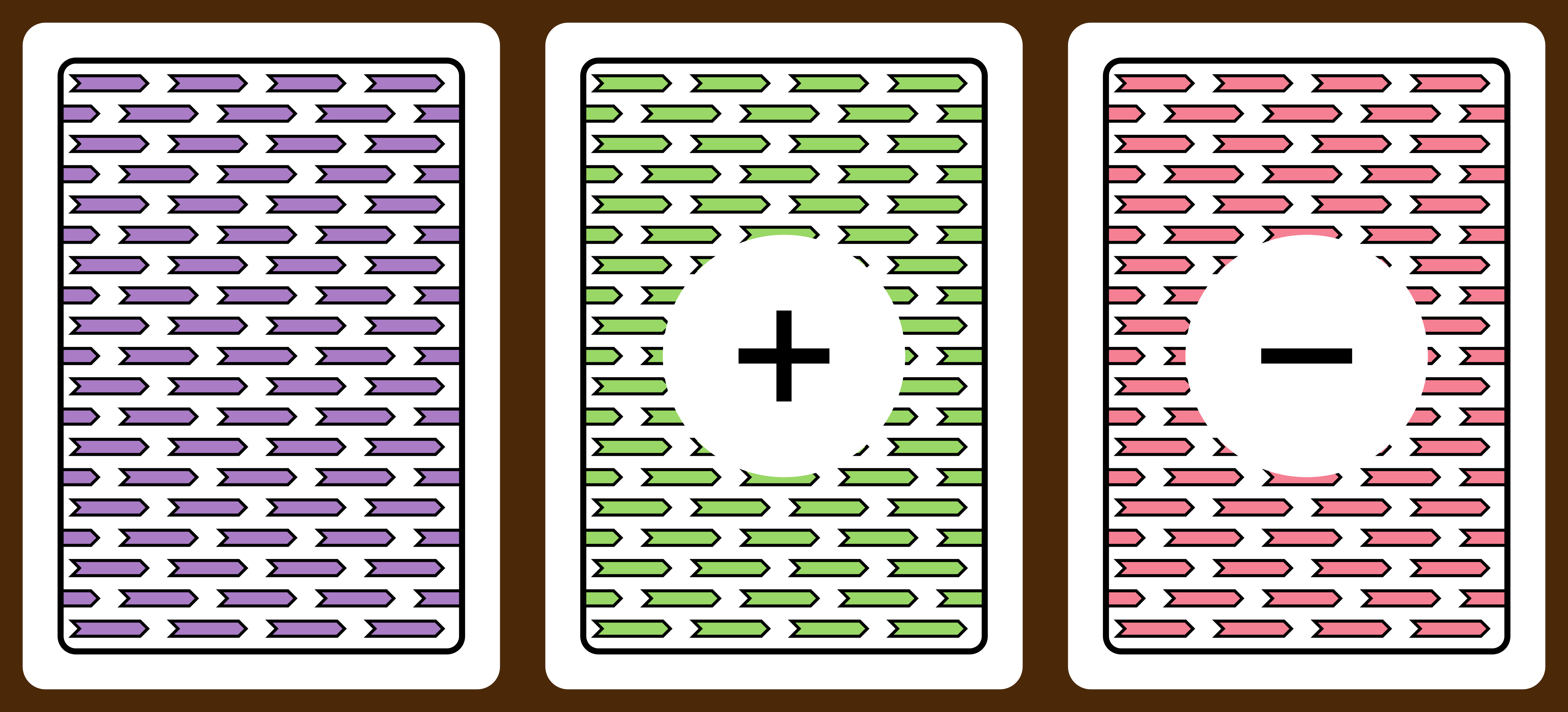
If you’ve been following this blog for some time, you might be wondering why I’ve been talking about cards at all. After all, for nearly 3 years, I’ve been saying that we can understand the economy in terms of what everyone owns, is owed and owes — and that’s all that the cards represent.
The reason is that I want as many people as possible to be able to understand economics. There’s strength in numbers. But economics has a reputation for being difficult to understand, and people are easily put off learning when the ideas sound like they might be difficult, even though people generally understand them quite well already. Owning things, being owed things and owing things are common experiences for most people, but I expect that expressing these ideas in terms of drawing, transferring and discarding playing cards makes it seem far less intimidating, and maybe even seem fun, while still being just as accurate.
So really it’s about psychology rather than saying anything different. I’ve actually bought 3 decks of cards from a printing company, and the next time I get to go on a podcast, I’ll be bringing them along to demonstrate the ideas. I think it would work much better than just showing the normal arrow diagrams — at least until listeners get the point. Playing cards are far more palpable than diagrams with arrows, even though the arrows have some advantages, especially in showing how everyone’s Raw Net Worth1 changes.
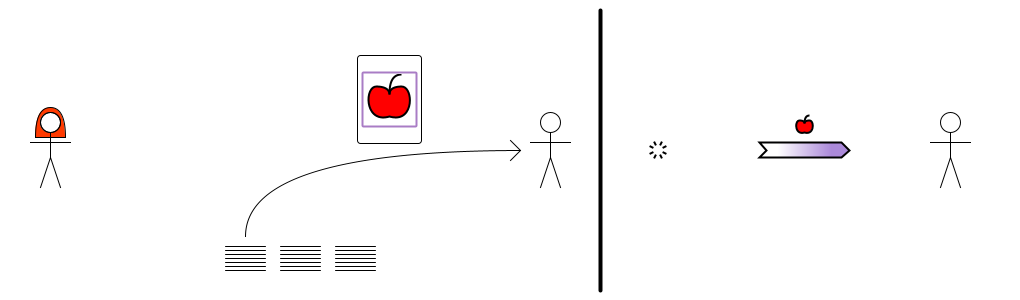
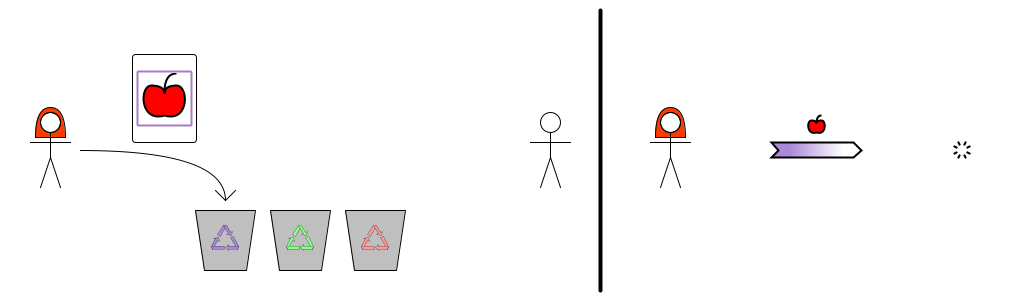
In the first article of this series, I described how the actions with playing cards related to the arrow diagrams, but I hadn’t worked out how to create images to show the playing card actions. Over the last few weeks, I’ve worked out a way to do it which is probably good enough, so I’ll finish this article by showing the relationship between the 7 economic actions and the actions of the card game which represent them.
Produce
Consume
Transfer tangible asset

Create debt
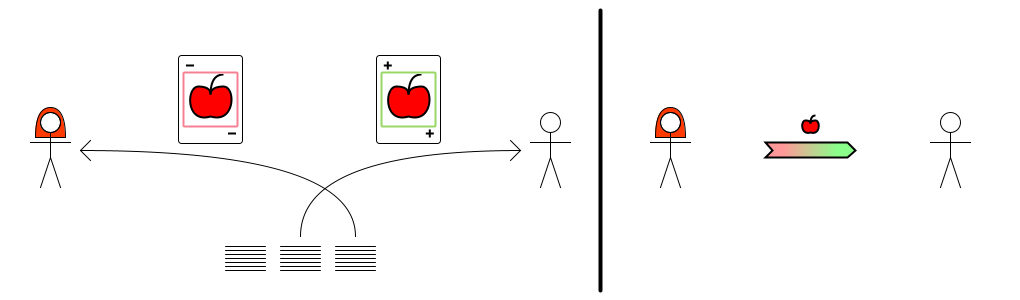
Transfer debt asset

Transfer liability

Write off debt
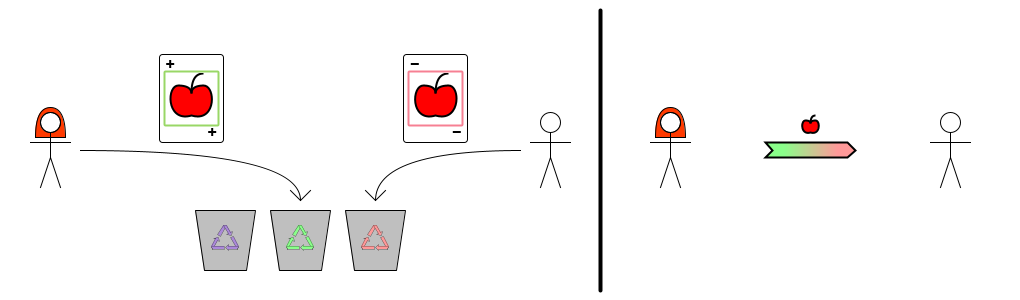
It’s important to remember that all economic activity is composed of these actions. And the effect of any combination of these actions is just the sum of the effects of the individual actions.
It’s hard to overstate just how important this is: in economics speak, there is no fallacy of composition. This is probably the most desirable feature of a model of anything! It means that you can understand the whole just by understanding the simple parts from which it’s composed. I believe this is unique (in economics), profound, and incredibly important, and it’s why I’ve been trying for years to share what I’ve discovered. If you think I’m right, or aren’t sure but think you know someone who you trust to judge it, please do share this blog! Many thanks!
Someone’s raw net worth (RNW) is what they own plus what they’re owed minus what they owe (i.e. their assets minus their liabilities). In general it is a “heterogeneous” sum/difference, which just means that things of different types are added and subtracted, not monetary “values” which have been assigned to them. If the idea is new to you, this article explains it with examples.